A quarterly social engine for a telecom software brand
Client background
A global telecom software and device maker expanding into overseas markets — five European countries, one flagship release, and an audience that had never heard of them. They came to us with a quarterly budget, a crowded calendar, and a simple demand: prove the numbers.
The situation
Launching hardware in new markets is noisy. Their competitors had years of presence; they had zero. The internal team was small, reporting cycles were quarterly, and every Euro had to show up in a report they could defend in a board meeting.
What we did
We built a launch engine around one sharp point: make people feel the product arriving, not just watch it land. Each flagship release got a countdown sequence (markets revealed one by one, daily), an interactive game (fans wrote why the device was perfect for them — winner got one free), and a feed series that linked directly to the sales page. Paid amplification scaled the moments that worked.
On top of that: a content calendar matched to each market's audience, and a quarterly report with impressions, clicks, engagements, and audience structure.
Short-term results
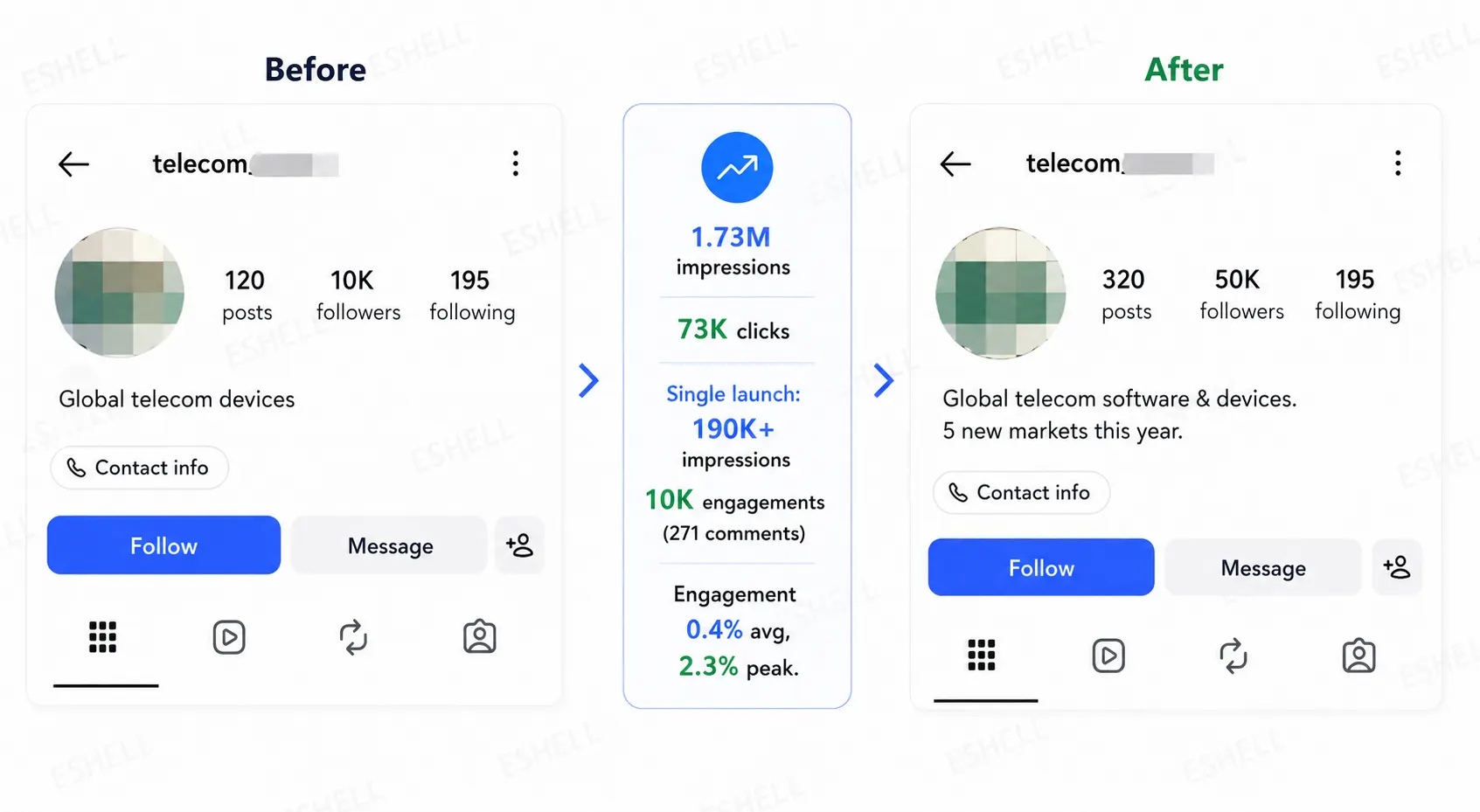
One launch campaign: 190K+ impressions, 11.3K clicks, 10K engagements, 271 comments. The full quarter: 1.73M impressions and 73K clicks across organic and paid, with paid feeds delivering 300K impressions and 67K clicks on top.
Long-term impact
The audience data became a positioning asset. Fans clustered in Southeast Asia (Philippines, Pakistan, India, Indonesia accounted for most of the Twitter base) — the next quarter's content and targeting were built from that, not from guesswork. The content baseline (0.4% average engagement, 2.3% peak on a single post) gave the team a quality bar they measure against to this day.
Evidence